Casual musings from a journalist, fiction writer, and former music industry fringe dweller.
Search This Blog
Showing posts with label Janine Coveney. Show all posts
Thursday, May 10, 2018
A Totally Fun Thing I Would Absolutely Do Again: 2018 Soul Train Cruise
Soul Train, the televised presentation of ‘70s-‘90s music and dance, is a much beloved, iconic symbol of culture in the world of not just R&B music, but popular music around the globe.
My recollection of my teen years is filled with memories of gathering around the TV set in our Bronx apartment for the absolutely necessary weekly half hour of live performances by Black America’s hottest acts, funky dance moves performed by enthusiastic teenagers, and host and founder Don Cornelius’ unflappable cool. To relive these memories, hear those sounds, and enjoy a great oceangoing vacation sounded like a good bet – and that’s the premise of this particular cruise experience. You get the fabulousness of cruising to fantastic vacation locales, mixed with the nostalgia and musical excellence of the Soul Train brand.
I’d wanted to go on the cruise since it was first introduced; was even offered an opportunity to go back in 2014 but couldn’t get the time off. But thank the Lord, praise the Muses, and undying gratefulness to a dear friend, earlier this year I got to experience the Soul Train Cruise for myself. And it was AWESOME.
THE 2018 EDITION
For the 2018 sailing, we departed Jan. 27 from Port Everglades in Fort Lauderdale, Florida, on Holland-America’s mega ship Nieuw Amsterdam. This was the Soul Train Cruise’s seventh annual voyage combining entertainment, nostalgia, tourism, and plain old-fashioned fun.
I felt lifted from the moment I came aboard, thanks to the music mixes being piped through all the public spaces, which totally sets the atmosphere. My companion and I were singing along on the elevators, two-stepping in the public spaces, finger-snapping in the dining room, and getting others to join in. People had flown in from all across the United States, and some parts of Europe and the U.K. There were couples and groups of friends, people in their 40s and people in their 80s. There were folks on board of all hues, and people for whom this particular cruise had become an annual tradition. We were connected by the music we all knew and loved, and the atmosphere on board was congenial.
After being shown to our quarters, which were fairly commodious and modern by ship standards, I couldn’t help but get excited by the prospect of being entertained day and night by live performances from many revered artists. Crowded into the Mainstage Theater auditorium seats, people from all backgrounds and from overlapping generations, swayed together as one, grooving along with the performers. It almost didn’t matter what acts were booked to perform – the excitement, appreciation, support for both the performers and fellow cruisers – was tangible all through the ship.
The 2018 Soul Train cruise featured Rose Royce, Howard Hewett, Jeffrey Osborne, the Trammps, the new Stylistics, the new Miracles, Eddie Levert, Gerald Alston, Marilyn McCoo & Billy Davis, the Pointer Sisters, the Whispers, and the indefatigable Charlie Wilson. Some of the performances were better than others, but the audience – there to relive their favorite memories with their favorite music – was not there to quibble. (For detailed reviews of the performances, see journalist A. Scott Galloway’s two-part coverage in EURWeb, beginning here.) The performances were spread out between midday, pre-dinner, and post-dinner times, in venues ranging from the two-story Mainstage theater, to the more intimate Billboard Lounge, and the party-hardy poolside areas. Dancers could visit the Crow’s Nest lounge after hours. And when the marquee acts weren’t on stage, there was a hard-working, soul singing sister named Alfreda who also entertained with a poolside band, and she was phenomenal.
Howard Hewett
Another highlight of the Soul Train Cruise experience was the chance to get more up close and personal with several of the name performers, something that isn’t easy to do at your average landlocked performance venue. Some of the acts took time to appear in small venues with the cruise host, Tony Cornelius, and velvet-voiced SiriusXM host Angela Stribling for intimate interviews that were also streamed on the ship’s circuit television channels. Consummate singer Jeffrey Osborne, who began his career as drummer for the band LTD, not only sat for an interview but later gathered drummers from the ship’s various performing bands for a fascinating drum workshop in the Crow’s Nest, explaining basic drum figures and giving live demonstrations, while Caribbean superstar Maxi Priest personally hosted a mixology class, stirring up original cocktails behind the bar of an upscale onboard lounge. Likewise, veterans Marilyn McCoo & Billy Davis of Fifth Dimension fame, hosted a workshop on marriage and relationships, revealing their own challenges and offering advice to those in the audience. These sessions gave cruisers a chance to get to know the performers in a casual setting. In addition, Chuck Gamble of Philadelphia International and SiriusXM’s Angela Stribling hosted specially themed gatherings for attendees.
Eddie Levert
Drummers talk craft.
2018 PORTS OF CALL
The Nieuw Amsterdam also took us to just two ports of call: Oranjestad, Aruba, and Willemstad, Curacao. These islands off the coast of Venezuela are popular Caribbean tourist destinations, and I wish I could have spent more time exploring them. A third tour stop was originally scheduled, but a rocky Caribbean crossing cut the itinerary down.
In Aruba, we visited the local Oranjestad market stalls then taxied past numerous hotel and condominium complexes to windswept Eagle Beach, where the sparkling turquoise waters were intensely salty and thus super-buoyant, a plus for anyone whose swimming and floating skills are less than stellar. WE opted not to rent lounge chairs hawked by a young man in Spanish, but we did partake when a vendor with a cooler of ice cream treats came by. The sun was pretty strong, so strong that our SPF actually failed us.
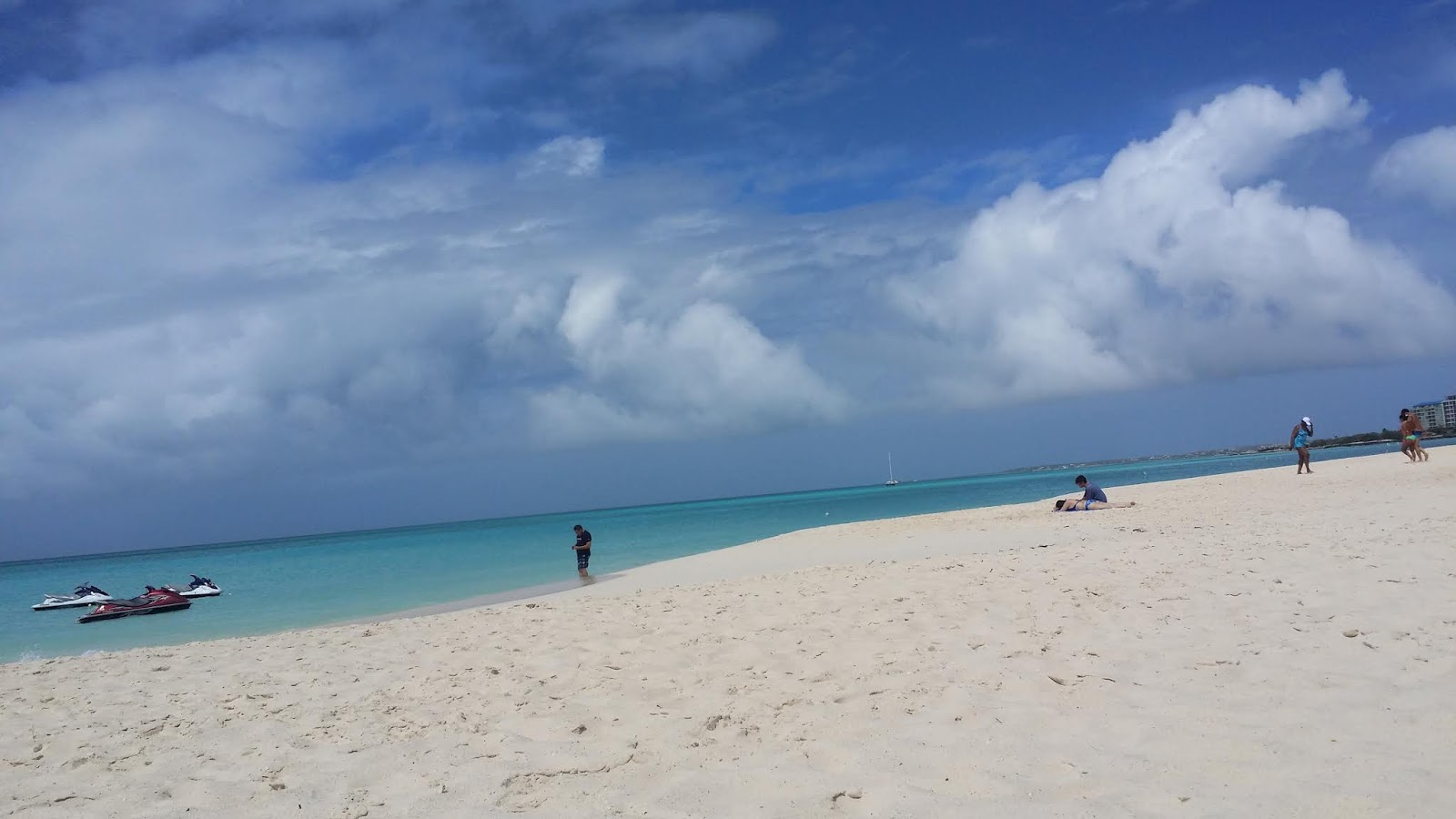
In Curacao the next day, we took a different approach, as we were sunburned and exhausted from the previous day. I booked a bus tour, one of several offered via the ship’s onboard excursion service, that would take us to three island locations. I figured that would give us a sense of the island and limit our exposure to the sun and too much walking! Tours gave cruisers opportunities to shop, visit the beaches, try water sports, visit cultural centers, and more.
For our tour, we stopped first at the original Blue Curacao factory, where the unique and internationally known liqueur is manufactured. Talk about making lemonade from lemons – seems the conquering Spaniards in the 16th century planted Valencia orange trees on Curacao, but the rocky soil yielded some tiny, bitter, green citrus fruits that were dang near inedible and useless until a man came up with a way to use the oil in the skin to create this tasty orange liqueur. The bottles are also unique as well. We viewed the exhibits about the process, then sampled some tasty Curacao-laced beverages on a shady patio and patronized the gift shop.
The tour bus then took us out of Willemstad into the countryside to visit a working aloe farm, listen to an explanation of how the plants are grown and buy some aloe products (great for our sunburns). Next, we motored on to an art cooperative, an indoor-outdoor space where artisans create the popular local figurines known as chichis. “Chichi” is the Papiamentu word for sister, and these figures of buxom brown ladies, created in different sizes and painted in various styles of dress, are extremely popular and potent symbols of Curacao culture.
WHY YOU SHOULD GO
First of all, cruising is one of the most popular and cost-efficient vacation packages, since the fun starts the moment you walk onto the ship. You walk onto one of these cruise line ships, and you have entered the floating mega hotel resort that is your base of operations for the duration. On Holland America, our room was spic and span, cleaned multiple times a day as we dined, danced, drank, spent time at the pool, and contemplated visits to the spa or workout rooms. The days we spent wandering the length and breadth of the Nieuw Amsterdam, we marveled at its enormity, efficiency, and design. The crew is unfailingly polite, cheerful, and eager to serve. Cruises are noted for all this, and their stops in beautiful, sun-drenched Caribbean ports. But most importantly, we were entertained by a series of beloved acts every day and night, and the Soul Train spirit – The Hippest Trip in America – was evident everywhere we went. But most of all, it’s the other people on board who really make the experience warm, friendly, fun-filled, and joyous. In other words, you’re going to experience a whole lot of Love, Peace and SOUL!
Chatting with Angela Stribling, Marilyn McCoo and Billy Davis.
Bookings for the Soul Train Cruise 2019 have already begun – and the ship is already HALF sold! -- so make your plans now. The ship sets sail from January 20 -27, with stops in the Dominican Republic, San Juan, Puerto Rico, and Half Moon Cay. And the lineup looks out of this world: Motown legend Smokey Robinson, the beautiful and talented Gladys Knight, funk Pied Piper George Clinton (who recently said he’s retiring!), the incredible Stephanie Mills, hitmaker Evelyn Champagne King, funky Morris Day & the Time, smooth vocal trio Ray, Goodman & Brown, separate sets by classic memory making bands Bloodstone, New Birth, and the Chi-Lites, and EWF veteran Al McKay’s All-Stars performing the music of Earth Wind & Fire. I mean, that sounds phenomenal!
Drop everything, call your friends and family, tell your boss you will be on vacation that week, and get out your boogie shoes for the Soul Train Cruise. You won’t regret it. For bookings and info, start here.
Sunday, March 06, 2016
What'samatta With WMATA? A New Yorker's rant against DC Metro
Ah, the daily commute! One of the necessary evils of working in a big city. I grew up in NYC and since the age of 12 was riding the subway a minimum of twice a day, so I knew the system and I knew the ropes: Move quickly, don’t block anybody’s way, be aware of your surroundings, use common sense. And you could ride anywhere in the system for a standard fare. NYC was dirty and there was crime and it wasn’t perfect, but it was an efficient system that set my expectations for how a city’s transit system should be. Admittedly I have been gone from the daily NYC grind for 20 years, and I’m obviously older, so my perspective may be skewed. But despite the Washington Metro being named the Number One public transit system in the U.S. by a firm called SmartAsset (should be called SmartAss), I’ve been in the VA-DC-MD area for four years now and this is not my experience. Riders are throwing in the towel and going back to driving (if I had better night vision for driving I probably would, too). Metro in DC sucks on multiple levels.
Here are 12 admittedly somewhat personal quibbles with the system:
1) Metro trains do not meet my definition of a "train." They are high-speed conveyances that approximate a train. They are more like "trams," those people-moving automated transports first put into use at amusement parks and other attractions. The Metro "trains" have drivers but no conductors, they lurch along an electrical track but the driver seems not to have the same controls as New York’s older, more traditional trains. Because of that, the Metro ride is herky-jerky as hell; a sudden stop can wrench your arm or throw you to the floor. These Metro drivers often can't hit their marks because of the imprecise braking controls so they will slow to a stop in the station -- fooling folks who gather by the doors -- then pull up to a second or even a third stop before opening the doors.
2) The electrical wiring along the tracks smokes frequently, so there is a constant noxious smell billowing through the tunnels that I am surprised no one complains about. You can tell it's poisonous. Last year there was an electrical tunnel fire when a train was caught between stations, and one woman died and others were hospitalized due to smoke inhalation.
3) The doors are horrible; they have no sensor mechanism to reopen if they close on something and they are so sensitive that leaning on them can cause the entire train to go out of service. And trains frequently go out of service. During rush hour, many train operators are so focused on keeping to a schedule (or are just oblivious) that they will slam the doors and move to the next stop regardless of how crowded the station is. This means that oftentimes not everyone who wants to get off gets off, and not everyone who wants to get on will get on. I've seen strollers, children, and the disabled smashed in the doors. I've seen children separated from parents, husbands from wives, and people from their bags. In July 2015 The Washington Post reported a news story about a man pulling the emergency brake outside of L'Enfant Plaza and jumping off with a 10-year-old; turns out dozens of riders helped him pull the brake because the doors had shut and separated him from his other child, a terrified 5-year-old boy.
A new recent Metro study undertaken after dozens of red light violations and near collisions shows that many Metro drivers are just tuned out. Which means riders are at the mercy of sleepwalking zombies.
4) Despite the fact of rapidly-closing doors, Metro riders are notoriously nonchalant in their movements. They have very little hustle or awareness. When those doors open, people stroll out like they have all the time in the world, and then you have to shake a tailfeather to get on so you won't be the one quashed or excluded. But people are clueless. They saunter just inside the doors and stand there, as though there aren't 30 people behind them. Tourists are the worst -- they take one step onto the train and gawk around like "Wow, so this is a train?" Or there's that guy who, regardless of how many people are getting on, insists on maintaining his spot in the doorway. I want to shriek MOVE THE FREAK INTO THE TRAIN!!! I have been known to push on occasion, something I know is awful and rude. But if there is room on the train, I don't have time for selfish, lackadaisical bullshit, I have some place to be and I'm not gonna be left on the platform because of selfishness and lassitude. A public service campaign about how to step lively could help.
5) People are just self-involved in general. The number of commuters sleepwalking along the platforms looking at their phones is legion. They have only a dim idea of where they are actually walking, they don't gauge the pace of the crowd, they don't have a sense of walking in a straight trajectory, they aren't paying attention. Metro is all puffed up and crowing about a new deal increasing the availability of cell phone signals in many stations, but I say CUT OFF ALL SIGNAL ACCESS!! Just have emergency call boxes! People don't have any common sense about what constitutes an appropriate place to check their devices, and most are just doing it to look important. Really? Really? Words With Friends or Candy Crush is so compelling that you are zigzagging and slowpoking in front of me during the height of rush hour??? Gah!! They are a shade worse than the people with the big headphones who can't hear anything in the real world, like the fact that you are coming up on their right or left while they are road-hogging. I won’t even get into the people who stop short in front of you, especially exiting an escalator, or who dart into your path without looking both ways. I want to hurt them. I have been known to step hard on the backs of their heels with my size 10 shoes. Again, get those PSAs cranking about common sense and pedestrian traffic in the Metro.
6) Part of the problem with people not moving into the trains is the way the cars are constructed. Trains in New York have the seating the long way against the walls, or a mix of horizontal and vertical seats, and there is a wide aisle with vertical and horizontal rails where commuters can stand and hold on. Here in DC, the older metro cars have two-fer seats stacked up on either side, auditorium style, so the aisle between is very narrow for riders to stand in and there’s often only a railing on the seats themselves to grab hold. If you're sitting you have to annoy your neighbor to get in and out of the inside seat. And the seating is one size fits all, a problem of comfort for both the plus-sized and those who must share with them. Newer cars introduced to the system last year are better, but they aren't yet ubiquitous.
7) Back to the Metro drivers -- too many abuse the public address system, haranguing commuters with ceaseless announcements and ridiculous patter. Why do they hold the erroneous belief that their post qualifies them to be radio DJs or certified city tour guides? While each station should be clearly announced, and one welcome statement at the end or start of the line is fine, enough is enough. Too many train operators make loud, florid announcements at every single blessed station and throughout the ride as well – often stating the obvious. They need their ears boxed, hard. SHUT THE F%$@#* UP! I'm not interested in tuning in to RADIO METRO! Some of us are trying to think about the day ahead or behind. Some of us are reading or catching up on e-mails. Some of us are just trying to get those last few minutes of peace before the bullshit waiting for us at work or at home.
I'm telling you, it is sheer torture to be subjected to a continuous, 40-minute loop of a shouted "Gooooooood morning, ladies and gentlemen! Welcome to the Washington Metro Train, riding from your home depot in Greenbelt Maryland all the way to Franconia Springfield in the great state of Virginia through Downtown Washington, the District of Columbia, our nation's capital! Sit back and enjoy the ride and have a fabulous day wherever it is you are going in our fine city! We are here to serve you and hope you ride with us again! Please remember to use all the doors when you are boarding the train! I'm grateful to be here today and every day and remember: Without you there is no me! (Yes, someone actually said that yesterday.) All aboard ladies and gentlemen, boys and girls, and welcome to the Green line, next stop today will be [HellFire Station], the second station on our route and the great state of Maryland, traveling through the exciting and historic District of Columbia, Please remember to take all of your precious belongings with you. Watch your step getting off and make extra certain that you have a wonderful day wherever you go.... " This noisy disruption makes me want to end my life immediately, like I want to start cutting and slashing and bleeding out right in the damned aisle.
Even worse is the fact that most of these happy pappy train jockeys are clueless about how to use the microphone properly. They put it too close to their mouths so their words are unintelligible or just deafeningly loud. They let an open window whistle and shriek through it, or they place it too close to a speaker so we get painful squalls of feedback, or they just keep the microphone open all the time so we hear a constant stream of migraine-inducing noise. At the other end of the spectrum are train operators whose announcements are a feeble, incomprehensible joke. Why bother if you a) can't speak clearly, b) cut the mike on too late or off too soon, c) have a faulty intercom system, or d) failed Reading Comprehension class? (There is a stop called Judiciary Square. Pronunciations include JEW-da-sherry, Ju-DISH-oo-Warey, and JEW-dish-ree. Then there is one operator who seems to have some New Orleans-style affection and calls each stop a “stay-shee-OHN.”)
By the time I step out of the Metro, I am completely stressed out, with my ears ringing and my nerves a-jangle.
8) Speaking of incomprehensible, the WMATA insists on frequently and formally referring to those on board as "customers" rather than riders, commuters, or the perfectly logical "passengers." Being called a "customer" reminds me of johns at a strip joint or rubes at a medicine show.
9) I guess at the high prices I’m forced to pay for each ride, I should be called a “customer.” The Metro constantly complains about not making enough money due to low ridership, but the high rates it commands – and charging ever-escalating fares depending on the distance ridden – are just ridiculous. And if you have to park before getting on, look out. I live in northern Virginia; it costs me almost $16 a day to commute to work. A roundtrip fare in New York—bus or subway -- is $5.50. If the DC Metro cost less, more people would ride. But service has to be better. Metro is always repairing things, so single-tracking extends wait times for trains; no service between stations on weekends forces people onto buses to go just one stop; and outside of peak hours you will see your life pass before your eyes before a train shows up. Added to that, elevator service at a number of stops is spotty, so if you have mobility issues you are forced to get out at a station you don’t want and again wait to board a bus back to where you do want to be.
10) Many of the underground stations are impossibly dim. As someone with vision problems, I feel uniquely handicapped, like I need a flashlight. Or better yet, one of those headlight helmets for descending into mines. I’m always worried that I will slip, trip and fall. Or walk into a wall. Or bump into someone and make them fall. Or trip over a child. I worry that we all will tumble ass-over-elbows into the tracks because of one misplaced step. When I get off at a station I am frequently just following the person in front of me because I can't see a thing before my eyes adjust to the darkness. It can feel scary when I can't see the edge of the platform or the height/depth of that first step. People have piled up behind me when I stick my foot out to test if that last step is actually the last step. And it's hideous becoming that slow obstacle person that I was just complaining about above.
11) The stations are dangerous. They're nice-looking, if you like atmospherically-lit slabs of molded concrete, but the fact that the indoor ones are poorly lit and weirdly constructed makes them a hazard for everyone. A man sat, slipped and fell behind one of the low concrete walls a few months back; he wasn't found for days. Also treacherous are those terra-cotta colored hexagonal tiles used as flooring. The tiles break and wobble, they catch a woman's high heels, and they are slippery when wet. I busted my ass one drizzly morning on an outdoor platform trying to hustle onto the train, like in a slapstick movie pratfall, and as soon as I got up another lady went down in exactly the same spot. If one of the tiles goes missing, you could break your ankle stepping into the hole left behind. Supposedly Metro is replacing the tiles, but they should have gotten it right the first time. The cost of constantly replacing these gizmos is astronomical. And what's with the little kiosks on the outdoor platforms? Did no one think these through? Purportedly they are weather breaks but they are open at the bottom, letting in the wind, the rain, and the snow, so who wants to sit there? Because they are metal and plastic, in the summertime they are sweatboxes. What were these MTA people thinking when they designed this crap?
12) Security on these trains has been a joke that they’re just starting to rectify. When I rode the NYC subway, it was a regular thing to see Transit Police going car to car or posted up on the station platforms. I hardly ever see uniformed police or security officers on the Metro trains or platforms. If I see them at all, they are hanging out by the fare booth. This is a problem. In recent months there have been stabbings, robberies, and assaults on the train and the platforms. As I mentioned, many of the stations are ridiculously dim and cavernous. If there is more than one exit, they are far apart, and even then, the station may be a good distance below ground.
I was dropped off at the Wheaton Station in Maryland one fall morning and experienced an interminable and concerning escalator ride down to the station – 230 feet, in fact, the longest escalator in the Western Hemisphere! While that may be some sort of architectural marvel, it is a security nightmare. During a non-rush hour it was terrifying because a lone rider – me!-- is isolated and vulnerable, particularly at the point where you can’t see the top or bottom. If the escalator were to suddenly go out of service, anyone with a physical disability would be up shit’s creek. If a wolfpack raced down the stairs, punched you, robbed you, sexually assaulted you, knocked you down, you would be hard-pressed to pursue or even be heard calling out, and it’s a long ride to any escape or assistance. Even with video cameras available, who is watching and how soon could someone respond?
Too many spots in the underground system are ripe for riders to be preyed upon. A deal was just struck to improve safety on the Metro system through a new oversight agency, and Metro has increased the police presence – we’ll see if it makes a difference.
People want a safe, effective, reliable, moderately priced transit system that doesn’t hold them hostage to unnecessary inconveniences and human folly. Let's hope WMATA can continue to address the issues of safety in the system to help boost service and ultimately ridership numbers.
Friday, August 28, 2015
How The Digital Revolution Is Teching Us Out, or The Creative Conundrum That IS
The recent New York Times Sunday Magazine story, “The Creative Apocalypse That Wasn’t,” uses some broad government labor statistics and anecdotes from a handful of creative artists to make the misleading and specious argument that the Internet has been a boon for creative artists. In arguing that art survives despite technology, the piece blithely ignores the fact that many creative professionals themselves have been devastated by it.
Creators within the music community are finding it more difficult than ever to make a living at their craft, and much of that difficulty is directly traced to Internet-based music services that don’t compensate them fairly for use of their work. The digital revolution that began in the ‘90s ushered in an era of devaluation for intellectual property across a range of industries. As the article rightly points out, consumers expect music – and movies, magazines, and news coverage -- to be free or nearly free, and the Internet feeds that expectation.
True, many creators are taking advantage of a range of new Web-based platforms to expose their music. But that is a result of the collapse of more traditional methods of exposure, with no other options available but technology based outlets. Rather than treating music as the valuable investment of time and talent that it is, big business and well-funded startups see music as a cheap and readily commodifiable resource with which to build new music-based business models. The music services themselves are raking in money through advertising and/or subscription rates while the originators of the music are barely compensated due to antiquated royalty rates or below-market direct deals.
With streaming and satellite services offering creators fractions of pennies per play, and a falling number of downloads returning not much more than that, music makers must also look to other forms of ancillary income. The NYT piece gleefully points to the many side hustles today’s creators can engage in to make a buck, overlooking the fact that today’s mid-level music creators have been forced out of the professional class into a pool of part-timers and hobbyists. Many music creators don’t have the option of touring or teaching to fill in gaps in their incomes; not all songwriters and producers are live performers, and others don’t or can’t choose to live lives on the road.
The NYT’s pro-tech article takes a common position that blames creatives for their circumstances. We love music, say consumers and big business, but the welfare of the people who make it is none of our concern. The Internet is great – just work twice as hard and you can survive.
Imagine telling full-time newspaper writers -- those with journalism degrees and years of bylines under their belts -- that if they just start writing twice as many articles for more media outlets, start podcasting, perform live readings of their work, teach newswriting classes, and clean houses on the side, they can make ends meet. Oh wait -- that is exactly what the new tech environment is telling professional journalists who have seen newspaper and magazine staffs dwindle alongside paid readerships thanks to the Internet.
Imagine telling investment bankers that their salaries will be cut by more than 50 percent, but that they should not only maintain their work output but use the Internet to take advantage of opportunities to make up that shortfall by teaching online investment classes and offering one-on-one financial consultations. They can round that out by booking live lectures and offering to do taxes. The NYT piece makes comparably laughable suggestions.
If there is one thing about the article with which we can agree, it’s the statement that negates the main thesis: “Most full-time artists barely make enough money to pay the bills.”
That ultimately should be the point – that an innovation that enriches some at the expense of others should be seen for what it is. The digital revolution is a mixed blessing at best.
Tuesday, December 02, 2014
"Justine"
The following is a creative piece I wrote while completing my MFA.
Justine
The daughter I do not have is named Justine. Her name aligns with the proliferation of names beginning with “J” that pepper the leaves on my family tree. I picked out her name long ago, almost since I could read, and I am hopeful that when she grows she will be judicious and wise as her name implies.
Justine looks at me with golden eyes. I plait her long, brown, kinky-curly, fine hair into two skeins, one over each shoulder, the way I wore mine when I was a child. But I won’t turn the braided ends up and tuck them into rubber bands so that they look like the blunt stumps of docked dog tails, the way my mother did me. No. I will spray the loose ends with water and let them curl as they may. When I have more time I will sit with her, mark out her scalp with a pink comb, and make many long braids, so that she appears to have a mane of thin twined ropes of brown. I will watch her braids fly around her head as she runs, colt-like, in the schoolyard with her friends.
The daughter I do not have, my little Justine, has soft honey skin, boney limbs and long legs with knobby knees. She has high cheekbones, our girl we don’t have, and almond-shaped eyes—whether from my Tainos or your Cherokees, I don’t know. Her front teeth are big and square as a beaver’s. They protrude onto her full pink lower lip, which she pokes out when she is sad or mad. Freckles arise like cinnamon specks across her pert nose in the sun.
She is the amalgamation of the past we know and the past we don’t: My Carib-Latino-Dutch-English-“Negro” and your Scotch-Irish-Cherokee-“Negro” – "Negro" being the old name for African-American that appears on the certificates of our own births. She is “light-skinned-ed” like me, like you. She is “high yalla,” “redbone,” “mariney.” Maybe these appellations, these accusations, will disappear from the culture by the time she grows up. Somehow I doubt it. She will have to hear it all, have to let it roll off her back because it means nothing. She didn’t choose her skin or our tangled ethnology.
Justine is a good girl. She will read many books, some too advanced for her age, but I won’t take them from her. She will love music, and I will buy her an iPod and fill it with pop music and jazz and old R&B and smile when she bops around the house with white wires protruding from her ears. Not too loud, though, baby, I will say. When she sings to the music that only she hears, I will be shocked and proud to learn that she has a strong voice that soars on key. She will get good grades in math and science, she will want to be a doctor. She will go out for sports like track and softball. She is the daughter of all daughters and I love her with a mother’s passion.
Justine is the daughter I don’t have, will never have. She is not a ghost, for she was never realized or real. She is an echo of a dream, a shimmering mirage that rises in the heat of my thwarted desire as I traverse the sands of the life I have instead. She is the shoulda-woulda-coulda of my middle age.
You said, I don’t want to us to have a baby right now.
You said, I can’t come to the doctor with you, honey, my schedule is just crazy.
You said, I understand that you have health problems but we have time, don’t get all worked up.
You said, You want to be a mother? You can’t even keep the dog’s water bowl filled.
You said, Not tonight, J, I’m tired.
You said, Stop climbing all over me, what are you, a slut?
You said, I don’t know when I’m coming home, when I’m good and ready.
You said, You know what? I’m tired of this shit.
I put my wedding rings away in a cardboard box next to melted wedding cake fantasies, but my dream of Justine did not die. She stayed with me in other forms, with other names, as I spent time with other men who played but didn’t stay. Years passed and my body gave out, my womb twisted. I had felt a touch of death every month since I was 16, pain growing progressively worse every year, blood draining until I couldn’t see, couldn’t stand, until I lost my color and my strength. Until my doctor said, “Enough.”
The first time they opened me up just to see what was there. The surgeons found knots of pain, balls of confusion, congealed dreams, compacted masses of frustration, repressed screams reduced to orbs of gristle. They found 32 fibroids where 32 babies could have lived and didn’t. My doctor laid them in rows on a surgical tray and photographed them. When I came out of the anesthesia, he handed me the Polaroid. It was too ugly to look at, to keep. So I lost it.
I thought I still had a chance. I ran to men -- sweat standing out on my brow, my breath ragged in my throat, a smile on my face. I wanted to be loved, to be redeemed. I wanted my Justine. I was scarred and blocked inside; only real commitment and costly modern medicine could bring my daughter to bear. The men smelled it on me. They backed away. I lost my resolve. I cried and grew weaker with every phase of the moon.
The second time into surgery they took it all away, scooped me out like a Halloween pumpkin. Twenty-four-seven, three hundred sixty five, I am a scary jack-o-lantern: No seeds, no smile.
I hear you are a proud father. I don’t want to know her name.
Justine
The daughter I do not have is named Justine. Her name aligns with the proliferation of names beginning with “J” that pepper the leaves on my family tree. I picked out her name long ago, almost since I could read, and I am hopeful that when she grows she will be judicious and wise as her name implies.
Justine looks at me with golden eyes. I plait her long, brown, kinky-curly, fine hair into two skeins, one over each shoulder, the way I wore mine when I was a child. But I won’t turn the braided ends up and tuck them into rubber bands so that they look like the blunt stumps of docked dog tails, the way my mother did me. No. I will spray the loose ends with water and let them curl as they may. When I have more time I will sit with her, mark out her scalp with a pink comb, and make many long braids, so that she appears to have a mane of thin twined ropes of brown. I will watch her braids fly around her head as she runs, colt-like, in the schoolyard with her friends.
The daughter I do not have, my little Justine, has soft honey skin, boney limbs and long legs with knobby knees. She has high cheekbones, our girl we don’t have, and almond-shaped eyes—whether from my Tainos or your Cherokees, I don’t know. Her front teeth are big and square as a beaver’s. They protrude onto her full pink lower lip, which she pokes out when she is sad or mad. Freckles arise like cinnamon specks across her pert nose in the sun.
She is the amalgamation of the past we know and the past we don’t: My Carib-Latino-Dutch-English-“Negro” and your Scotch-Irish-Cherokee-“Negro” – "Negro" being the old name for African-American that appears on the certificates of our own births. She is “light-skinned-ed” like me, like you. She is “high yalla,” “redbone,” “mariney.” Maybe these appellations, these accusations, will disappear from the culture by the time she grows up. Somehow I doubt it. She will have to hear it all, have to let it roll off her back because it means nothing. She didn’t choose her skin or our tangled ethnology.
Justine is a good girl. She will read many books, some too advanced for her age, but I won’t take them from her. She will love music, and I will buy her an iPod and fill it with pop music and jazz and old R&B and smile when she bops around the house with white wires protruding from her ears. Not too loud, though, baby, I will say. When she sings to the music that only she hears, I will be shocked and proud to learn that she has a strong voice that soars on key. She will get good grades in math and science, she will want to be a doctor. She will go out for sports like track and softball. She is the daughter of all daughters and I love her with a mother’s passion.
Justine is the daughter I don’t have, will never have. She is not a ghost, for she was never realized or real. She is an echo of a dream, a shimmering mirage that rises in the heat of my thwarted desire as I traverse the sands of the life I have instead. She is the shoulda-woulda-coulda of my middle age.
You said, I don’t want to us to have a baby right now.
You said, I can’t come to the doctor with you, honey, my schedule is just crazy.
You said, I understand that you have health problems but we have time, don’t get all worked up.
You said, You want to be a mother? You can’t even keep the dog’s water bowl filled.
You said, Not tonight, J, I’m tired.
You said, Stop climbing all over me, what are you, a slut?
You said, I don’t know when I’m coming home, when I’m good and ready.
You said, You know what? I’m tired of this shit.
I put my wedding rings away in a cardboard box next to melted wedding cake fantasies, but my dream of Justine did not die. She stayed with me in other forms, with other names, as I spent time with other men who played but didn’t stay. Years passed and my body gave out, my womb twisted. I had felt a touch of death every month since I was 16, pain growing progressively worse every year, blood draining until I couldn’t see, couldn’t stand, until I lost my color and my strength. Until my doctor said, “Enough.”
The first time they opened me up just to see what was there. The surgeons found knots of pain, balls of confusion, congealed dreams, compacted masses of frustration, repressed screams reduced to orbs of gristle. They found 32 fibroids where 32 babies could have lived and didn’t. My doctor laid them in rows on a surgical tray and photographed them. When I came out of the anesthesia, he handed me the Polaroid. It was too ugly to look at, to keep. So I lost it.
I thought I still had a chance. I ran to men -- sweat standing out on my brow, my breath ragged in my throat, a smile on my face. I wanted to be loved, to be redeemed. I wanted my Justine. I was scarred and blocked inside; only real commitment and costly modern medicine could bring my daughter to bear. The men smelled it on me. They backed away. I lost my resolve. I cried and grew weaker with every phase of the moon.
The second time into surgery they took it all away, scooped me out like a Halloween pumpkin. Twenty-four-seven, three hundred sixty five, I am a scary jack-o-lantern: No seeds, no smile.
I hear you are a proud father. I don’t want to know her name.
Thursday, May 17, 2012
Love To Love You, Donna
I am devastated to learn of the passing of the brilliant Donna Summer, whose music was such an integral part to my maturation. "Love To Love You" was mindblowing, with its driving synth and daring vocals. I thought Donna was gorgeous. When her second album, A Love Trilogy, was quickly released in March 1976, just eight months after Love To Love You, I went to DiscoMat on Lexington to buy the album. Reminiscing about dancing to Donna's music, I listened to her 70s output on YouTube one day back in 2008, and it reminded me how much I loved these tracks. I even incorporated Donna into the current novel I am writing, in which the main character is obsessed with her (Lady Lady or Personal Summer).
In tribute to Donna, here is what I wrote back in 2008:
Writing while jamming to music on YouTube. Why does “Try Me (I Know We Can Make It)” by Donna Summer give me such a delicious thrill? Because it’s 1976, lost in time.
Donna’s voice is operatically, candy-coatedly sweet. There’s the precision of the violins making their commentary over the four-on-the-floor beat, made more emphatic with congas, drums, and rhythm guitar in unison, on the One. Behind it: an ethereal progression of harpsichord notes, questioning, as though this is Marie Antoinette’s disco fever, as though Mozart himself condones this conga-driven, guitar-scratching morsel of dancefloor heaven. Try me, try me, try me, try me just one time, try me, try me, try me, try me any time, try me for love, baby don’t you think you should? Don’t you? The beat clops on, simple, bright and sharp as new pennies landing in a marble fountain. Donna in a wind tunnel, her voice a piccolo of melody rising from a golden throat, her breath and her hair floating, tossing, as the background vocalists sigh their harmonies.
And the breakdown, it’s heartbeat compelling, it’s a Gotta, you are gonna move your damn feet! The bass is metronomic in just two keys, alternating, I tell you the congas are delicious, I just wrote a whole story about the compelling propulsion of congas, try me, ohhhh, try me…. And now it’s a decision, a mandate: I know, I know, I know, I know, I know … twirling around in a silver feathered dream, and now the oh-so-European synth is tinkling down like a stream over the running bass and the shiver of high hat accent, … I know --we can make it! Now comes the part that is just the running bass with a tickle of guitar, the part that made me pick up my feet, hop a little in the Hustle, back and forth, We can make it if we try, we can make it touch the sky. Oh the happiness, the optimism, yes we can, I know we can can, there’s no way not to keep the beat, you bump up against the bass drum’s wall of massive power, pow, um, pow, um, every two steps, and she says, I wanna hold on tight with all my might, pray you’ll never stop, it’s a cupid prayer sent to the sky, to the glory of the night, and this is a disco siren song of symphonic, epic proportions, we’re now in the third movement.
We can make it if we try, we can make it, dead or alive, because even if we pass from here, we’re going on, our feet keep us moving to a place beyond this pale reality, where nothing fails us. And now we’re onto the next phase, baby, the place where we began, and the cymbals crash, we pause for breath, there’s a tense warning crescendo of strings, and we tumble back to Try me I know we can make it, I know we can try, and the black girls go, if we try try try. Damn, this shit gives me goosebumps.
Yet it’s so silly, so simple, so creaky with age, this track. But it wings me back to 16, when all is still new and I am fleet of foot, dancing in perfect time with a guy, a stranger who holds my hand who matches me step for step, we’re a tag team of two, never met but we know exactly what to do, and there is nothing but wind in front of us as we concoct this instant magic across a starlit floor. We’re sliding into the end zone, a beautiful high-heeled and sequined denouement, and now the drum kit is shivering, the drummer’s got both feet working, the cymbals are chattering with joy, and Donna is heaving, moans of ecstasy fading, afterglow sweet as honey sliding slowly down like the sweet icing in MacArthur Park, and I am sticky, limp with gratitude.
Thank you, Donna. Thank you.
Saturday, February 18, 2012
Bittersweet Memories ….
Whitney Houston: An Alternate View
From the beginning she was
the embodiment of duality:
Sweet yet sensual,
young yet old,
pop yet R&B,
gritty yet sophisticated.
Who could successfully balance these opposites
without verging on schizophrenia?
The world is bidding farewell to songbird Whitney Houston, who left us much too soon. Her passing at the age of 48 is so tragic, ironic, and awful that even these words can’t encompass it. Her voice was a gift to the world, a force so powerful that whole generations of singers owe a debt to her shimmering mix of gospel feeling and pop precision. She had seen the pinnacle of success through adulation, awards, applause, and admiration. She had also endured the deepest recesses of hell due to addiction, abuses, failed expectations, troubled relationships, and public ridicule. I mourn for her passing, and pray for her family, friends, and fans – all of those who loved her.
I first became aware of Whitney Houston in the mid ‘80s via WBLS New York’s quiet storm program, which played her “Saving All My Love For You.” I was an editor at Essence then, and not on the music beat. The song was amazing. It sounded world-weary to my ears, rendered in a voice that was sweet yet supremely mature. This was a song about dreams of forbidden love crushed, over and over, by a married man who won’t commit, yet the dreamer chooses to delude herself into not giving up on it. Relatable, certainly, but also pathetic: love leads us to make foolish choices but we just can’t help ourselves. The performance put me in mind of someone older and/or stylistically alternative – an Anita Baker, a Regina Belle, a Jean Carne, or a Marlena Shaw. Who was this fabulous new singer? Whitney Houston, a fresh-faced former teen model, daughter of the great Cissy Houston, barely into her 20s.
The photos I finally saw of Houston, and the material she released immediately after “Saving,” did not jibe with my initial musical impressions. What could this stick-thin baby diva know about cheating with married men? I know that singers are only interpreters of music, of lyrics often written by others, and that their material is not always autobiographical. However, experience does deepen performance. In a certain way I felt gypped – maybe not by Whitney herself, but by what was being presented to me as Whitney. “Saving All My Love For You” was a great song – but the fact of her recording it told me things about her: That she was after an audience that wasn’t exactly her peer group, that she was fine with casting herself as a victim, even in a song; and that she was out of step with an era witnessing the rise of street-level hip-hop, retro British soul, and new jack swing.
Sure, I loved Whitney’s “You Give Good Love,” and she did a fantastic job with the notoriously difficult anthem “The Greatest Love of All,” but when the video for “I Wanna Dance With Somebody” came out – with Whitney in pastels, blonde extensions, and tutu, jumping around like a pogo stick, backtracking artistically to scoop up the young, all-American pop audience – the disgruntled feeling of having been duped in an artistic bait-and-switch had taken over me. I admit that I’d been giving the girl the fish eye ever since.
Whitney possessed a beautiful face, figure, and talent. She was an old-fashioned chanteuse for a new generation; she could venture into pop ditties, sweeping anthems, and R&B grooves with equal ease. She had laserlike control over that unbelievable voice – like Luther Vandross, she could execute exactly what she envisioned with little audible struggle. Her phrasing was off-the-chain pristine. My response to her was varied, though. I liked individual songs. I knew her story, where she came from, how she had developed, who she was working with musically. But I couldn’t really feel her as a person behind the artist. As naturally talented as she was, I was profoundly aware of her as a construct, as a product of an ever-spinning “A Star Is Born” machine.
Does no one remember how Whitney was booed at the Soul Train Awards in the early ‘90s because of the perception that she’d sold out to cross over to the pop chart? Whitney was a church girl from Newark whose genes came from Cissy, Dionne, and by extension, Aretha, and she had become the epitome of the American Dream Girl. But we like to claim our own. And folks weren’t comfortable with the genre tightrope-walking visible in her career trajectory. From the beginning she was the embodiment of polar opposites: Sweet yet sensual, young yet old, pop yet R&B, gritty yet sophisticated. She went from chitlins to caviar. (And let’s not forget that her first film role as a proud black diva paired her romantically with – not Denzel, not Eddie – but the older, white Kevin Costner in The Bodyguard. When she married Bobby Brown, her fans could not seem to wrap their minds around the Pop Princess marrying the Bad Boy of R&B.) Who could successfully balance these diametrically opposed qualities in their life without verging on schizophrenia at times?
Personally I was stuck on the jazz promise I’d first heard in her. I wanted Whitney to front a big band, break out some standards, and scat. I wanted her to write poetic material and sing words that came from her soul, backed by organ hits and a horn section or soft acoustic guitars. I wanted her to, as Teddy Pendergrass once sang, “get down, get funky, get loose.” Some people will say that I’m nuts, that Whit was as real as it got, that certainly she could go there, and when she performed gospel material it was a revelation for all. Folks were eating up what Whitney dished out and clamoring for more. In interviews there were flashes of warmth and charm. Still, I wondered when the real Whitney Houston would stand up. To me she seemed professionally rehearsed and guarded, with something harder underneath. But this was my critical view; my perceptions can often be those of a jaded conspiracy theorist. What I wanted for Whitney clearly had no bearing on anything, and if she had taken the musical path I imagined for her she would not have become a worldwide phenomenon and beloved vocal icon, may not have attained the well-deserved honors bestowed on her. But perhaps she’d still be alive.
While working at Billboard, I did get a chance to meet her. In fact, I was invited to her palatial home in Mendham, New Jersey, for her 26th birthday bash. It was incredibly exciting to make the drive out to her private domain for a spectacular bash chock-full of music industry greats. She was a gracious hostess, but we did not have a conversation.
Just a few years later, I became a product manager at her label, Arista Records. I did have dealings with the Nippy camp; The Bodyguard soundtrack had just topped the charts when I came on and Whitney was busier than ever. I dealt most often with her close friend and handler, Robyn Crawford, rather than Ms. Houston herself. I remember making a business trip to provide support for a Houston event, and Whitney barely acknowledged my presence. Granted, she had a lot going on. I had a better time goofing around with her husband, Bobby Brown, whom I always found to be engaging and funny. But I lasted less than a year in the gig. I was never to see Whitney again other than on television.
Whitney’s downward slide into drug abuse, bizarre behavior, financial ruin, and ultimately divorce saddened me. Like her most ardent fans, I hoped that with the release of her last album she would rally and reconnect. That did not happen. I was surprised to learn that she had been cast in the remake of Sparkle: that too represented a glimmer of hope for her professional and financial future. But perhaps the role – as the mother of a singing star in the making – only served to remind her of all she’d lost. We’ll never know. But as Whitney Elizabeth Houston is sent home in grand style at her family church in Newark this weekend, I hope that she truly and finally is “at rest.” The world will never experience a voice like hers again.
Subscribe to:
Posts (Atom)